Mattress materials, construction, and comfort
Inside Obasan’s Organic Mattress Design: Materials, Layers, and Craft
A mattress is a private landscape: part engineering, part material, and part the body’s nightly negotiation with gravity. To evaluate an organic mattress from Obasan—or any maker—you need more than a list of appealing fibers. You need to know what each layer does, how the materials are described, and whether the design suits the person who will sleep on it.
An independent guide to construction and comfort, not a product endorsement.
The appeal of an organic mattress—and the questions behind it
“Organic” is a useful starting point, but it is not a complete description of a mattress. It may refer to one material, several materials, or a finished product that meets specified standards. Cotton in the cover, wool in the quilting, and latex in the comfort layer may each have different origins, processing methods, and certifications. A label on one component does not automatically tell you how every other component was made.
That distinction matters because mattress shopping tends to compress a complicated object into a few reassuring words: natural, clean, breathable, supportive. Those words can point toward meaningful qualities, but they are not substitutes for construction details. A careful evaluation asks what a mattress contains, where those materials appear, what they are meant to do, and what independent documentation supports the claims.
Obasan is associated with organic and natural mattress design, making its products a useful subject for this kind of close reading. Yet model specifications can change, and mattress lines may offer multiple configurations. A responsible assessment should therefore begin with the current product description, construction sheet, and certification information for the specific model and size under consideration—not with assumptions based on the brand name alone.
The aim is not to treat a mattress as a moral test, nor to assume that natural materials automatically create better sleep. It is to understand how a bed is built, what its materials can reasonably contribute, and whether the result makes sense for your body, room, budget, and preferences.
Read the mattress from the outside in
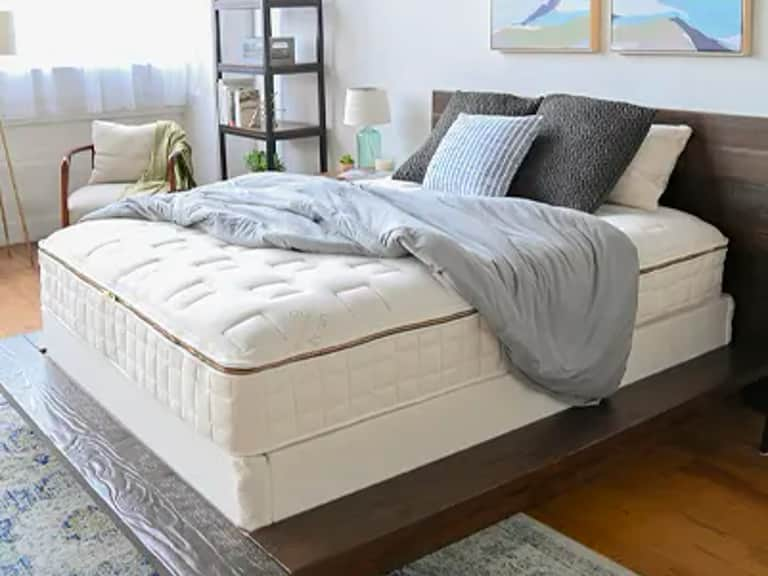
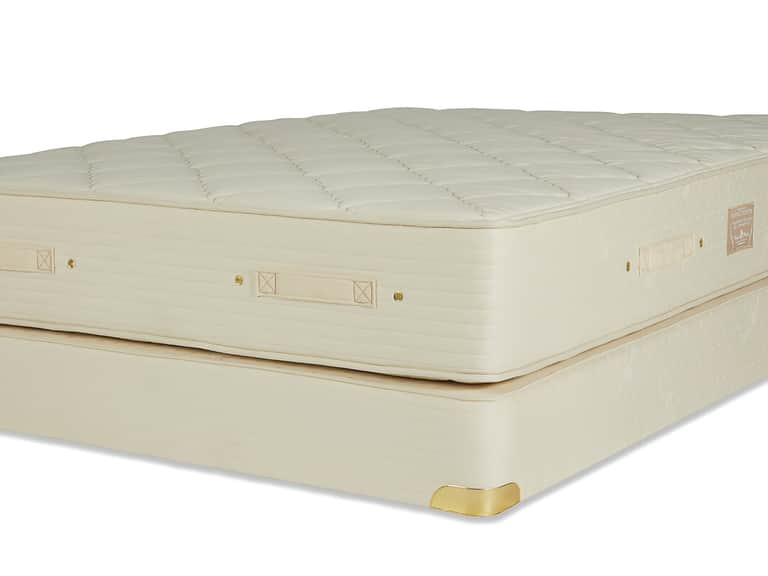
A mattress can be understood as a sequence of jobs. The outer fabric protects the interior and contributes to the first impression of touch. Quilting or a comfort layer shapes the immediate surface feel. Deeper layers provide cushioning and support, while the base contributes stability and helps the mattress work as intended. In some designs, those functions are performed by distinct materials; in others, one material may do several jobs.
This is why a list of ingredients, though useful, is only the beginning. “Cotton, wool, and latex” tells you something about the material palette. It does not reveal the thickness of each layer, whether the latex is one piece or several, how the components are arranged, or how the mattress responds when someone lies down. Construction is the relationship between materials, not merely their names.
When considering an Obasan mattress, look for a model-specific breakdown. Is the comfort layer separate from the support core? Are the layers described by material and thickness? Is the cover removable, and if so, is it intended to be washed or only handled according to specific care instructions? Can firmness be adjusted, or is the construction fixed? These details make a product easier to compare and set realistic expectations.
It is also worth distinguishing a mattress’s nominal height from its usable comfort structure. A tall mattress may have generous quilting, a substantial support core, or both; height alone does not explain how it feels. Conversely, a relatively simple construction may provide a feel that suits a particular sleeper very well. The cross-section is more informative than the number of inches printed in a headline.
Natural latex: responsive, but not one uniform experience
Latex is often central to conversations about natural mattresses. It can offer a buoyant, responsive feel: rather than slowly molding around the body in the way some memory foams do, it commonly pushes back more promptly as the sleeper changes position. That description is a tendency, not a guarantee. Latex formulation, density, firmness, layer depth, and the materials surrounding it all affect the finished feel.
Some latex is made using the Dunlop process; some is made using the Talalay process. These terms describe different manufacturing approaches, and products can vary in feel and structure within either category. A buyer should not infer that a process name alone determines quality or comfort. More useful questions include: What type of latex is used? Is it natural, synthetic, or a blend? What does the maker disclose about its composition and sourcing? How thick is the layer, and what firmness options are available?
Natural latex is frequently valued for its resilience and ability to provide cushioning without the same enveloping sensation some sleepers dislike. But “natural” does not settle practical questions such as temperature preference, motion transfer, or pressure relief. A person who likes a springy surface may find latex pleasing; someone who prefers to sink deeply into a bed may not. The right test is personal, and online descriptions cannot fully reproduce it.
Material sourcing deserves its own scrutiny. Latex may originate from rubber trees, but the words “natural latex” do not by themselves explain the full supply chain or the percentage of natural content. If provenance or environmental standards are important to you, seek documentation tied to the particular material and finished product rather than relying on broad promotional language.
Cotton and wool: the layers closest to the sleeper
Cotton commonly appears in mattress covers and quilted surfaces. Its hand, weave, and construction influence how the top of the bed feels before the sleeper encounters deeper layers. A fabric may feel smooth, crisp, or textured; a tightly fitted cover can also affect how freely the layers beneath it respond. The word “cotton,” by itself, does not specify weave, weight, origin, or certification.
Wool may be used in quilting or as a cushioning layer. It can help manage moisture and contribute to a more even-feeling sleep surface, but its presence should not be turned into a universal promise about temperature. People differ in how warm they sleep, and the whole bed environment matters: room temperature, bedding, humidity, mattress construction, and individual physiology all play a role. Wool is also an animal-derived material, a consideration for shoppers seeking a vegan design.
In an organic mattress, these fibers may be selected for function as well as material preference. Yet the amount and placement matter. A thin layer in the cover is not equivalent to a substantial layer within the quilted top. To understand the design, look for a description that clarifies where the cotton and wool sit and whether they are blended with other fibers.
Care instructions are part of material transparency. A mattress may contain beautiful natural fibers and still require careful handling. Ask whether the cover is removable, whether spot cleaning is recommended, and what the warranty says about stains or moisture. A protector can help guard against spills and everyday soil, but it also adds another textile layer that may subtly alter the surface feel.
Support is not the same thing as firmness
Mattress descriptions often place “supportive” and “firm” close together, as if they were interchangeable. They are not. Firmness is the subjective impression of how hard or soft a surface feels. Support concerns how well the mattress accommodates the body while maintaining a comfortable, stable posture. A mattress can feel plush at the surface and still offer substantial support underneath; a very firm mattress can feel uncomfortable if it does not suit the sleeper’s shape and position.
Sleeping position provides a useful, though imperfect, starting point. Side sleepers often pay close attention to cushioning at the shoulder and hip. Back sleepers may prefer a balance that allows the lower back to feel comfortably supported without excessive sinking. Stomach sleepers often seek a surface that limits deep hip compression. These are general tendencies, not rules: body shape, weight distribution, mobility, and personal comfort can change the result.
Shared beds introduce another variable. Two people may have different firmness preferences, different body types, or different sensitivities to movement. If a mattress offers split firmness or adjustable layers, confirm exactly which portions can be configured and whether the choice applies to each side independently. If the construction is fixed, consider how the bed’s response may feel to both sleepers rather than assuming a single label will serve everyone equally.
Support also depends on what lies beneath the mattress. The frame or foundation should follow the manufacturer’s requirements for spacing, center support, and compatibility. A mattress placed on an unsuitable base may perform differently than expected, and a sagging or uneven foundation can complicate the question of whether the mattress itself is at fault.
Certifications: useful evidence, not a shortcut
Certifications can help shoppers evaluate claims, but the name of a standard is only meaningful when you understand what it covers. Some certifications apply to a specific raw material or component; others address the finished product or certain stages of production. The scope, criteria, and validity period matter. A certified cover does not necessarily mean that every internal component carries the same certification.
When reviewing Obasan’s materials, check which organizations or standards are named and whether the documentation relates to the exact model you are considering. Look for certificate numbers, current validity, the entity being certified, and a clear explanation of the product components covered. If the brand provides a detailed materials statement, compare it with the certification record rather than treating either source as a substitute for the other.
Transparency is often more useful than a long list of reassuring adjectives. A strong materials disclosure distinguishes organic from non-organic components, identifies blends where relevant, and explains the role of each layer. It should also make clear what is not included in the claim. If you cannot tell whether a phrase describes the cover, a layer, or the entire mattress, ask the manufacturer for clarification before making a decision.
Certifications can address defined environmental, agricultural, or chemical criteria, but they do not establish that a mattress will be comfortable for you. Nor do they prove that it will cure pain, eliminate allergies, or improve sleep quality in every circumstance. Treat certification as one piece of evidence about materials and manufacturing—not as a verdict on the whole experience.
Craft is in the details—and in the questions left unanswered
Craft can sound like a romantic word in product copy, but in mattress construction it should point to observable details. Are the layers described clearly? Is the cover stitched or quilted in a way that affects the surface? Are materials held in place by a design that allows them to function as intended? Does the company explain how the mattress should be rotated, supported, and maintained?
Some mattresses are designed with layered or modular components, allowing a sleeper to alter firmness or replace a particular layer. Others are built as a fixed unit. Neither approach is automatically superior. Adjustability can offer flexibility, but it may involve extra steps, shipping, or a learning curve. A fixed construction may be simpler, but leaves fewer options if the feel proves unsuitable. The value depends on what can actually be changed, for how long, and under what terms.
Longevity, too, is not a quality one can infer from “organic” or “handcrafted.” It depends on material quality, design, use, foundation, maintenance, and the sleeper’s expectations. Before buying, read the warranty carefully. Note what counts as a defect, what degree of visible indentation is covered, and what conditions may void protection. A warranty is a contract with defined limits, not a prediction that the mattress will feel unchanged for a particular number of years.
There is a small but important pleasure in a well-explained object. When a maker names the materials, describes their arrangement, and gives clear care guidance, the buyer can imagine not just the bed’s surface but its construction. That clarity does not guarantee a perfect match. It does make the decision less dependent on atmosphere.
A practical way to evaluate an Obasan mattress
Before choosing a model, translate the product description into a short set of questions. This keeps the process grounded in details rather than in a contest between elegant adjectives.
- What is inside? Identify each major layer, its material, thickness, and role in the construction.
- What does “organic” refer to? Confirm which components are certified and whether the claim applies to the whole mattress or selected materials.
- What does the surface feel like? Ask how the quilting, cover, and top comfort layer influence the initial impression.
- How is firmness specified? Find out whether firmness is offered in multiple options, whether the scale is explained, and whether two sides can differ.
- Can the construction be adjusted? Check whether layers can be changed, what the exchange period is, and what costs or conditions apply.
- What foundation is required? Verify compatibility with your frame, platform, slats, or adjustable base.
- How should it be cared for? Review cleaning instructions, rotation guidance, and the practical role of a protector.
- What do the trial and warranty actually say? Read the terms, including fees, return conditions, exclusions, and the definition of a covered defect.
If possible, test the mattress in person, taking enough time to lie in your usual sleeping positions. Notice whether pressure builds at the shoulder or hip, whether the surface feels too lively or too yielding, and whether changing position is easy. A brief showroom visit cannot reproduce a full night, but it can reveal immediate mismatches. If shopping remotely, check the trial policy with the same care you give the material list.
Organic materials and sleep: keep claims in proportion
Choosing an organic mattress may reflect concerns about material sourcing, manufacturing standards, personal values, or the desire to understand what is in a bedroom. These are reasonable priorities. They should be kept distinct, however, from claims about medical outcomes. A mattress can be made with carefully documented materials without being a treatment for insomnia, chronic pain, or an allergy.
Sleep is influenced by many things beyond the bed: health, schedule, stress, light, temperature, noise, and habits all matter. A mattress can improve comfort or reduce a source of nightly irritation, but it cannot reliably solve every sleep problem. When persistent pain, breathing concerns, or sleep disruption is affecting daily life, a qualified health professional is a more appropriate source of guidance than marketing language.
Likewise, a natural material is not automatically the right material for every person. Wool may not suit someone who avoids animal products. Latex may not match someone’s preferred feel. A breathable cover cannot compensate for a room that is too warm or for heavy bedding. The most useful purchase is not the one with the most virtuous-sounding ingredient list, but the one whose documented construction and comfort profile fit the sleeper.
The quiet logic of a well-made bed
Evaluating an organic mattress is an exercise in looking past the surface without losing sight of it. The materials matter, but so does their arrangement. Certifications matter, but only within their stated scope. Firmness matters, but not as a substitute for support. Craft matters when it can be seen in the construction, care instructions, and clarity of disclosure—not merely in the confidence of the description.
Obasan’s organic mattress designs are best considered one model at a time, with current specifications in hand. Ask what the layers do, how their origins are documented, what comfort options exist, and what recourse is available if the feel is wrong. The answers should help you form a picture of the mattress before it arrives: not an idealized promise, but a workable understanding of materials, structure, and likely experience.
That is the point of a thoughtful mattress guide. It does not tell every sleeper to want the same thing. It gives them better questions—so that, when the room is quiet and the day has finally loosened its grip, the bed is less of a mystery.
Frequently asked questions
Does an organic mattress mean every part is organic?
Not necessarily. The claim may apply to particular materials or components rather than the complete mattress. Check the model-specific materials list and the scope of any certification.
Is natural latex always firm?
No. Latex feel depends on formulation, firmness, layer thickness, and the surrounding construction. Look for the specific firmness options and, when possible, test the mattress.
Will an organic mattress improve sleep automatically?
No mattress can guarantee better sleep for everyone. Comfort, sleeping position, room conditions, health, and personal preference all influence the experience.
What should I verify before ordering?
Confirm the current model’s layers and certifications, firmness choices, foundation requirements, care instructions, trial terms, return conditions, and warranty exclusions.